
Helena Blavatsky
Level 1
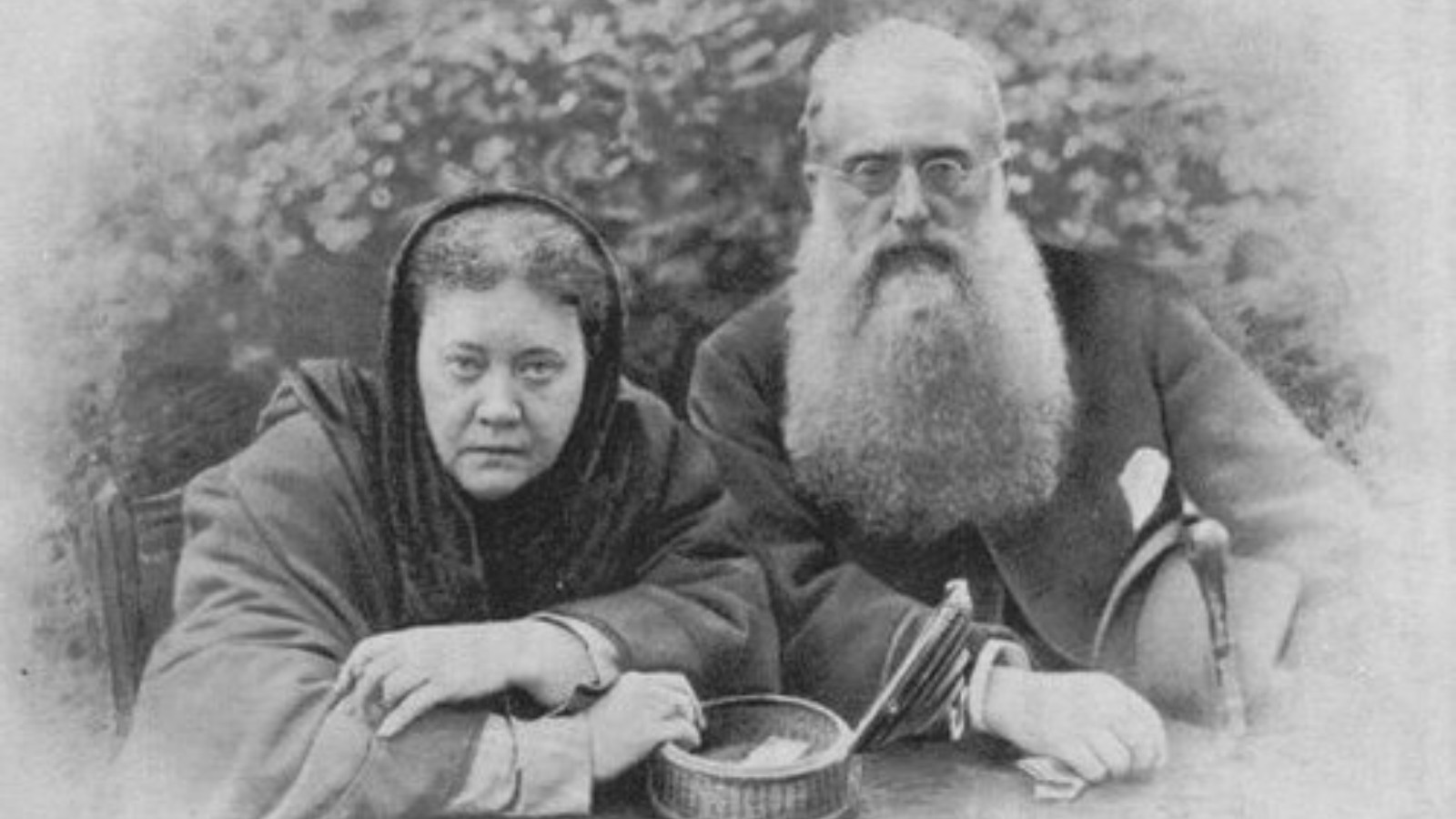
Discover the eccentric and mystical life of Helena Petrovna Blavatsky, the Russian aristocrat who co-founded the Theosophical Society in 1875 and helped spark the modern occult movement.
Madam Helena Blavatsky remains one of the most enigmatic and colorful figures of the 19th century, weaving together ancient Eastern philosophies, esoteric mysteries, and extraordinary personal legends.
Key facts
1. Born Into Russian Aristocracy
Helena Petrovna Hahn was born into a high-ranking noble family in Ekaterinoslav, Russia, on August 12, 1831, growing up surrounded by ancient folklore and a vast library of occult texts.
2. A Defiant Runaway Bride
At just seventeen years old, she married a much older military general named Niceifor Blavatsky purely out of a rebellious challenge, only to escape and flee the marriage just three months later.
3. Ten Years Of Wild Wanderings
Following her escape, she spent a decade traveling across the globe through Turkey, Egypt, Greece, and North America in search of hidden mysteries and spiritual experiences.
4. Claimed Secret Training In Tibet
Blavatsky maintained that she managed to cross into Tibet on multiple occasions, where she spent years undergoing rigorous esoteric training under the guidance of spiritual masters.
5. Co-Founder Of The Theosophical Society
Alongside Colonel Henry Steel Olcott and others, she established the Theosophical Society in New York City on November 17, 1875, aiming to explore unexplained laws of nature.
6. Author Of Monumental Tomes
She penned massive, influential literary works like 'Isis Unveiled' and 'The Secret Doctrine,' which sought to unite science, religion, and ancient myth into a single perennial philosophy.
7. Fascinated By Root Races
Her complex cosmology introduced unusual evolutionary theories to the West, including the idea of successive root races of humanity that inhabited lost continents like Lemuria and Atlantis.
8. A Magnet For Bizarre Phenomena
Throughout her life, followers and friends reported witnessing strange occurrences around her, from sudden mysterious raps and floating objects to materializing missing teacups.
9. Pioneer Of Modern Occultism
By challenging dogmatic materialism and popularizing concepts like karma and reincarnation, she laid foundational groundwork that heavily shaped the 20th-century New Age movement.
10. A Lasting Enigma
Helena Blavatsky passed away in London on May 8, 1891, leaving behind a legacy split between those who viewed her as a profound spiritual teacher and those who deemed her an eccentric charlatan.
Would you like to put your new knowledge to the test by taking a quick quiz on Madam Helena Blavatsky?
Level 2
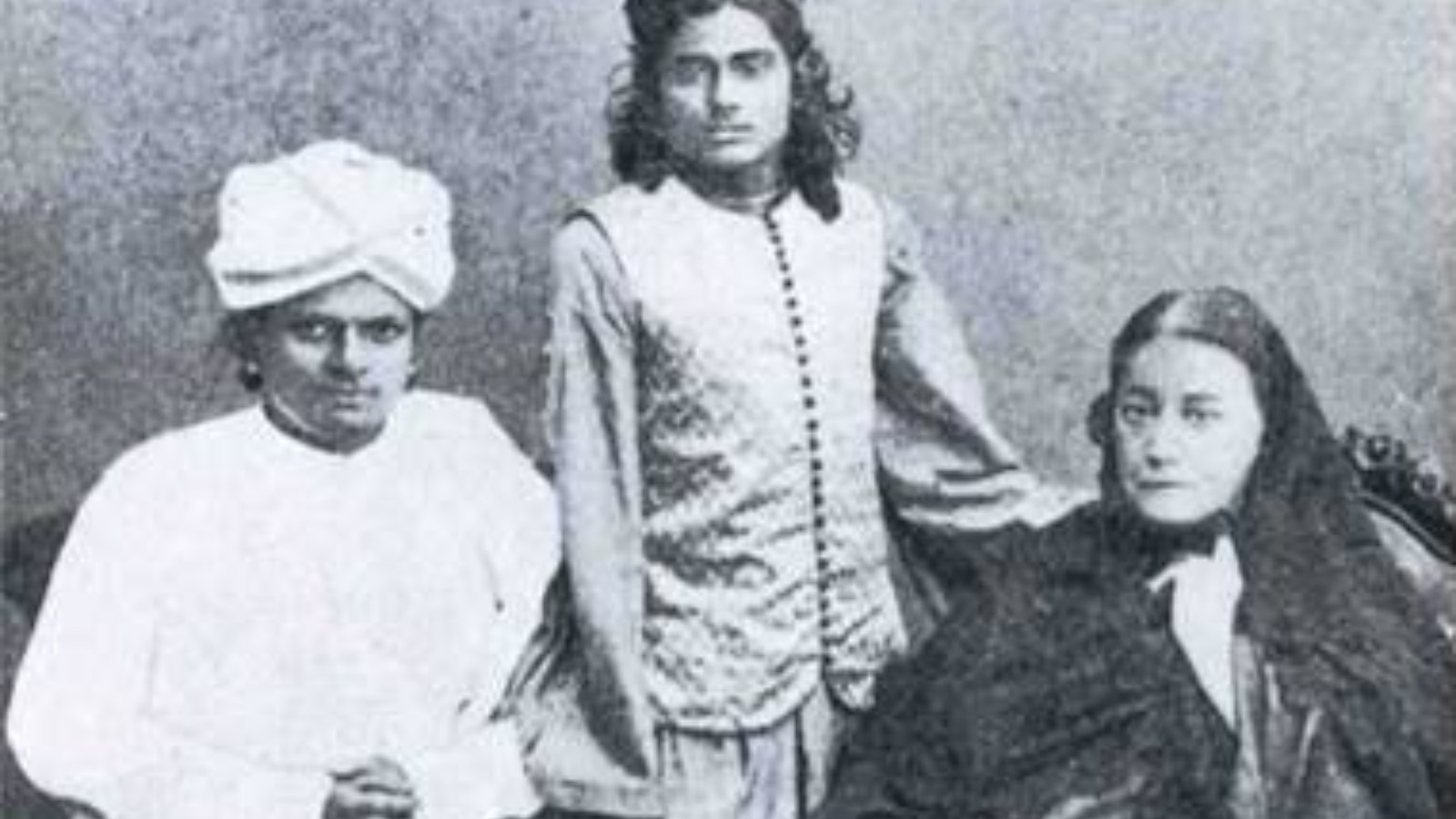
Delve deeper into the complex psychological and historical layers of Helena Blavatsky, whose radical synthesis of Eastern esoteric traditions challenged Victorian scientific materialism.
Navigating between brilliant scholarship and controversial occult claims, Helena Blavatsky permanently altered Western spiritual landscapes by reintroducing ancient concepts of universal brotherhood and hidden dimensions.
Key facts
1. Childhood Marked By Somnambulism
From a very young age, Blavatsky experienced vivid somnambulism, intense visions, and claimed to wander the subterranean corridors of her family estate accompanied by unseen playmates.
2. The Vowed Opposition To 'Shalt'
Legend records that during her forced teenage wedding ceremony, upon hearing the priest use the word 'shalt,' she muttered through her teeth that she certainly would not obey, setting the tone for a life of radical independence.
3. Encountering The Master Morya
In 1851 while visiting London, she claimed to have physically met the Eastern adept known as Master Morya, whom she had previously known only through her childhood psycho-spiritual visions.
4. Challenging Nineteenth-Century Spiritualism
Upon arriving in America, Blavatsky critiqued mainstream spiritualist circles, arguing that mediums were merely contacting residual psychic shells rather than high spiritual entities.
5. The Three Core Objects
The Theosophical Society she helped build was founded on three distinct principles: universal human brotherhood, comparative religion study, and the investigation of latent human psychic powers.
6. The Journal Lucifer
In 1887, she co-founded a monthly periodical titled 'Lucifer,' taking the ancient Latin name for the morning star with the bold editorial slogan 'To bring to light the hidden things of darkness'.
7. The Hodgson Report Controversy
Her credibility faced a severe blow in 1885 when the British Society for Psychical Research published the Hodgson Report, branding her phenomenon-producing methods as fraudulent, though modern scholars debate its bias.
8. Synthesizing The Prisca Theologia
Blavatsky dedicated her life to popularizing the idea of a 'prisca theologia'—the belief that an unbroken, ancient perennial wisdom forms the esoteric core underlying all world religions.
9. Global Intellectual Footprint
Her complex writings deeply inspired prominent artists, writers, and thinkers of her era, ranging from composer Gustav Mahler to abstract pioneer Wassily Kandinsky.
10. Pivotal Cultural Transition
By bridging Eastern concepts like karma with Western psychological searching, she acted as a crucial bridge between traditional esoteric societies and the modern metaphysical revival.
Would you like to put your new knowledge to the test by taking a quick quiz on Madam Helena Blavatsky?
Level 3
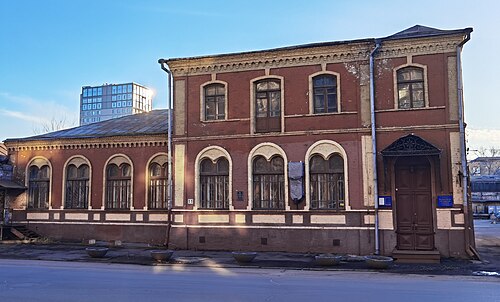
Examine the intricate esoteric architecture, profound philosophical controversies, and global socio-historical impact defining Helena Blavatsky's monumental contribution to alternative thought.
Examining Helena Blavatsky requires navigating an intricate web of 19th-century occultism, alternative historiography, and radical philosophical counter-narratives that continue to challenge orthodox worldviews.
Key facts
1. Aristocratic Lineage And Rosicrucian Roots
Born Helena von Hahn into Russian nobility, her intellectual trajectory was heavily influenced by her great-grandfather's extensive 18th-century library containing rare Rosicrucian and alchemical manuscripts.
2. The Transformative Caucasian Crisis
Between 1860 and 1865, she underwent an intense physical and psychological crisis in the Caucasus—including severe trauma from a sword wound—that she claimed allowed her absolute mastery over occult phenomena.
3. The Cairo Société Spirite Venture
Her early 1871 attempt to establish a spiritualist society in Cairo collapsed rapidly amid accusations of financial mismanagement and fraud, serving as an early rocky lesson in public occult organizing.
4. The Chittenden Investigation
Her alliance with Colonel Olcott solidified at the Eddy farm in Vermont, where she sought to expose fraudulent mediumship while publicly demonstrating her own distinct control over anomalous physical manifestations.
5. Mahatma Letters And Esoteric Transmission
A core pillar of early Theosophy involved the reception of 'Mahatma Letters'—phenomenally manifested correspondence allegedly transmitted by Himalayan adepts guiding the society's trajectory.
6. Isis Unveiled As A Polemical Masterpiece
Her 1877 magnum opus, 'Isis Unveiled,' served as a sprawling, aggressive critique of orthodox scientific materialism and dogmatic Christian theology, utilizing comparative mythology to validate esoteric claims.
7. Cosmological Architecture Of The Secret Doctrine
Published in 1888, 'The Secret Doctrine' outlined a sweeping cosmic evolution encompassing cyclic universal periods, universal consciousness, and multi-layered spiritual development across planetary chains.
8. Radical Reinterpretation Of Eastern Traditions
While championing Buddhist and Hindu concepts, Blavatsky's syncretic framework often introduced highly idiosyncratic, Westernized interpretations of Nirvana, karma, and ancient texts that sparked considerable debate among Asian scholars.
9. Global Propagation Through Adyar Headquarters
Relocating the international headquarters of the Theosophical Society to Adyar, India, in 1882 allowed her movement to deeply intersect with Indian nationalist pride and the revival of indigenous philosophies.
10. Foundational Influence On Modern Counter-Cultures
Blavatsky's intellectual architecture directly or indirectly seeded countless 20th-century esoteric organizations, alternative spiritualities, and modern conspiracy historiographies.
Would you like to put your new knowledge to the test by taking a quick quiz on Madam Helena Blavatsky?
Published by WizdomMaster · Educational content for quiz enthusiasts