
How Trees Communicate: 10 Facts About the Wood Wide Web
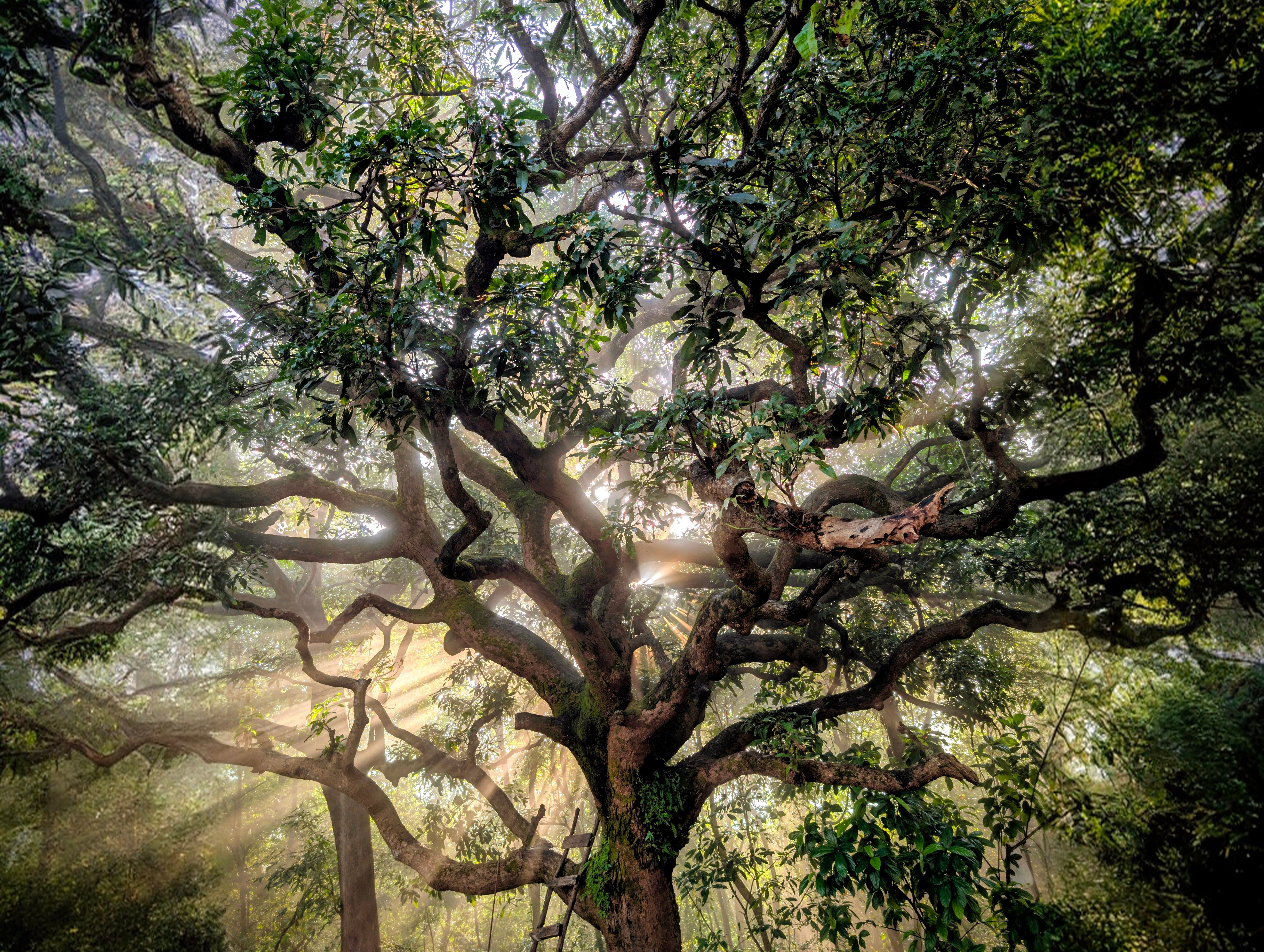
1. The Wood Wide Web is a fungal connection
The term Wood Wide Web describes underground connections formed by mycorrhizal fungi. Their fine threads, called hyphae, associate with plant roots. When a fungus connects the roots of more than one plant, it forms a common mycorrhizal network. These connections exist, but their extent and ecological importance vary; a whole forest should not automatically be pictured as one unified network.
2. Trees and fungi exchange resources
Photosynthesis allows trees to make sugars using sunlight. Trees supply their fungal partners with carbon-based compounds, while fungi help them obtain resources such as phosphorus, nitrogen and water. The amount of carbon allocated to fungi varies with the species and growing conditions. It is not a fixed fee paid for access to forest news.
3. Mother trees are a hypothesis, not forest managers
Older, larger trees are sometimes called mother trees because they may have many belowground connections. Researchers have investigated whether these connections help seedlings. However, the claim that mature trees routinely direct surplus food to their offspring through fungi remains debated. A network connection alone does not demonstrate deliberate support or a benefit to the recipient.
4. Damaged leaves can release airborne signals
Insect feeding can cause plants to release volatile organic compounds, or VOCs. Nearby plants exposed to certain VOCs may activate defenses or become primed to respond more strongly to a later attack. These are biochemical responses, not conscious warnings. Caterpillars are insect herbivores; giraffes, which also browse trees, are mammals.
5. Chemical signals can recruit an attacker's enemies
Some chemicals released after herbivore damage attract organisms that attack the herbivore. Parasitoid wasps are one example: they lay eggs in or on hosts such as caterpillars, and their developing offspring eventually kill the host. This indirect defense does not require a tree to identify an attacker consciously or intentionally summon help.
6. Electrical signals travel inside plants
Plants use electrical signals, alongside chemical signals, to coordinate responses to injury and environmental stress. These signals involve changes in electrical potential across cell membranes. Plants do not have nerves or brains, and signal speeds vary. A single speed cannot accurately describe electrical signaling in all trees.
7. Carbon transfer is not automatically cooperation
Studies involving paper birch and Douglas fir have reported movement of carbon between trees. Researchers continue to examine the routes, quantities and consequences of such transfers. Detecting transferred carbon does not by itself establish that fungi carried all of it, that the recipient gained a meaningful advantage, or that trees cooperate across an entire forest.
8. Chemical interactions can also inhibit competitors
Allelopathy occurs when chemicals released by an organism affect other organisms, including neighboring plants. Black walnut produces juglone, a compound that can inhibit the growth of susceptible plants under certain conditions. Its effects in a garden or forest depend on exposure and environmental conditions, not simply on the presence of a walnut tree.
9. Dead trees recycle nutrients, not wisdom
Decomposition returns nutrients from dead trees to the ecosystem, where other organisms can eventually use them. This well-established process differs from the claim that dying trees deliberately send their remaining reserves through fungal networks. There is no established evidence that trees pass on defensive wisdom as a final inheritance.
10. Root acoustics remains an emerging research area
Experiments have explored plant responses to sound and vibration, including root growth responses associated with water-related sounds. These findings do not establish that forest trees communicate through underground clicks at a universal frequency of 220 hertz. Acoustic tree-to-tree communication remains a research question rather than a settled feature of the Wood Wide Web.
Key facts
- Mycorrhizal fungi form associations with plant roots and can connect different plants.
- Trees supply fungal partners with carbon-based compounds in exchange for resources such as soil nutrients.
- Volatile organic compounds can influence the defenses of nearby plants.
- Black walnut produces juglone, a chemical associated with allelopathy.
- Claims about mother trees deliberately feeding seedlings or dying trees passing on wisdom exceed established evidence.
Test your knowledge
Ready to quiz yourself on Science & Innovation? Take the quiz now!
Start Quiz →Published by WizdomMaster · Educational content for quiz enthusiasts