
Life on Mars: Ancient Water, Modern Mysteries
Was Mars Once Habitable?
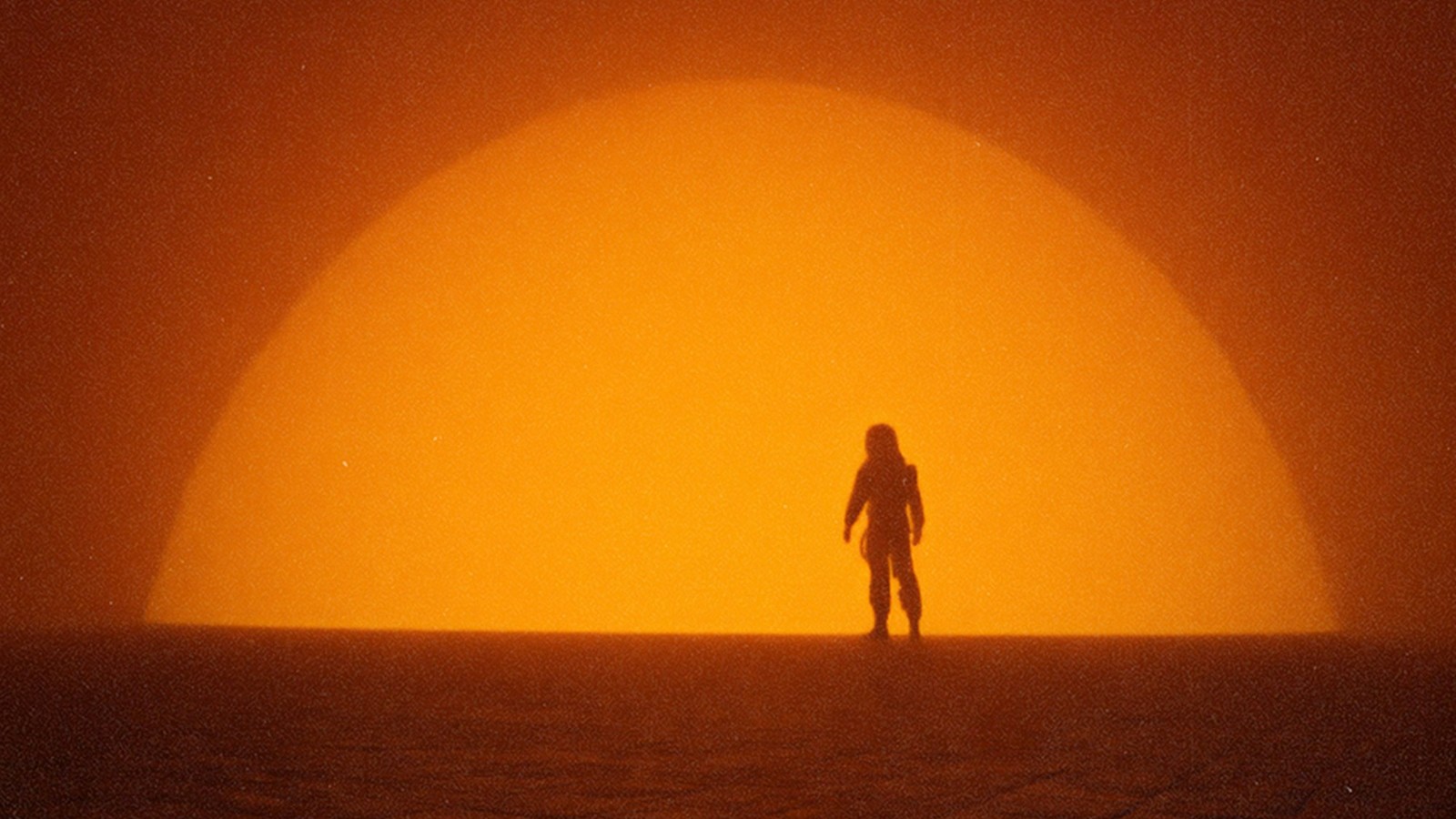
Mars is now a cold, dry world with a thin atmosphere, but its landscape records a wetter past. Ancient river valleys, lakebeds and water-altered minerals show that liquid water once shaped the planet. Some researchers also propose that Mars once had a large ocean, although that remains debated.
These environments make Mars an important target for astrobiology: the study of life in the universe. However, evidence that a place could support life is not evidence that life actually existed there.
How Mars Lost Its Protection
Early Mars had a global magnetic field generated by activity inside the planet. That field later disappeared as its interior evolved. Without this protective barrier, the solar wind could more readily strip gases from the atmosphere, contributing to the loss of surface conditions favorable to liquid water.
Today, the thin atmosphere and lack of a global magnetic field leave the surface exposed to damaging ultraviolet and space radiation. These conditions make it a difficult environment for life as we know it.
Three Clues That Have Sparked Debate
- Viking experiments, 1976: NASA’s Viking landers carried out the first dedicated biological tests on Martian soil. One experiment produced a response consistent with possible biological activity, but the overall findings did not establish that life was present. Non-biological chemistry remains an important explanation.
- Martian meteorite ALH84001, 1996: Researchers proposed that this meteorite, discovered in Antarctica, contained possible evidence of ancient Martian life, including microscopic structures. Those structures are not accepted as proof of fossil bacteria.
- Curiosity’s methane detections: NASA’s Curiosity rover has measured methane near the surface, including variations and occasional spikes. Microbes produce much of Earth’s methane, but non-biological processes can also generate it. The origin of Martian methane remains unresolved.
Why Jezero Crater Matters
NASA’s Perseverance rover is exploring Jezero Crater, which once contained a lake and a river delta. It is collecting rock cores for a proposed return to Earth, where laboratories could examine them for chemical and microscopic evidence of past life.
Researchers also investigate minerals associated with ancient hydrothermal activity. On Earth, hot-spring environments can support microbes and preserve traces of them, making comparable Martian deposits promising search targets.
Could Life Survive Underground?
The Martian subsurface could offer shelter from radiation. If suitable liquid water and energy sources exist there, underground environments might support microbial life. Such inhabited refuges have not been discovered.
Earth’s halophiles—salt-loving microorganisms—help researchers test the limits of survival in salty, Mars-like conditions. Their resilience informs the search, but does not demonstrate that organisms could thrive in every Martian brine.
The central distinction remains clear: Mars has evidence of past habitable environments and several intriguing chemical clues, but no confirmed evidence of extraterrestrial life.
Key facts
- Ancient Mars had rivers and lakes, providing environments potentially suitable for microbial life.
- NASA’s Viking landers performed biological experiments on Martian soil in 1976.
- A 1996 study proposed possible signs of ancient life in Martian meteorite ALH84001, but the interpretation remains unconfirmed.
- Curiosity has detected methane, which can arise from biological or non-biological processes.
- Perseverance is collecting rock samples in Jezero Crater for a proposed return to Earth.
Test your knowledge
Ready to quiz yourself on Science & Innovation? Take the quiz now!
Start Quiz →Published by WizdomMaster · Educational content for quiz enthusiasts