
Succulents: How Plants Store Water and Survive Dry Conditions
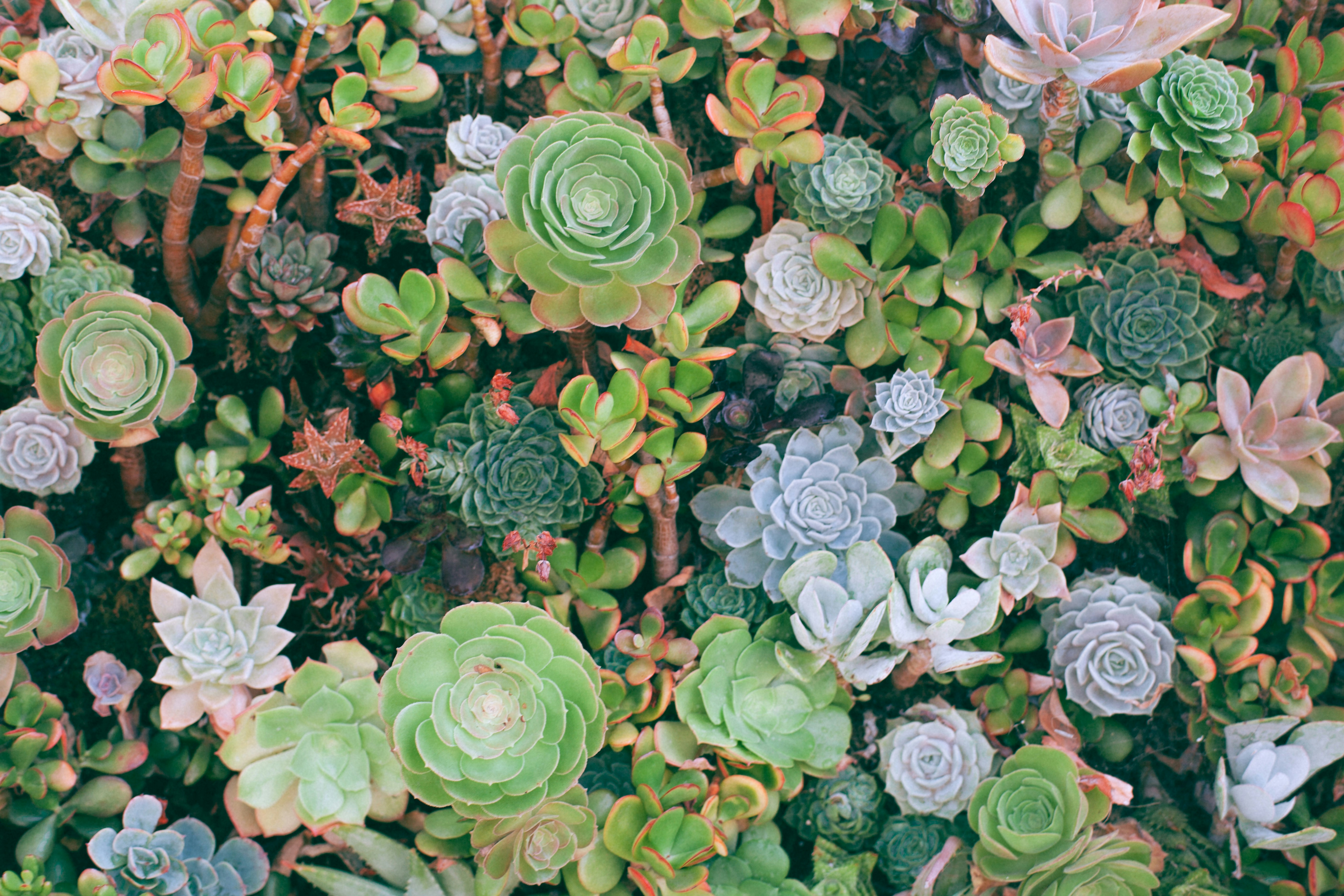
Water reserves built into the plant
A succulent's fleshy appearance serves a practical purpose: it holds a reserve of water. Depending on the plant, that reserve is stored in leaves, stems or roots. These water-storing tissues help succulents endure extended periods without rain.
Although often associated with deserts, succulents occupy a much wider range of habitats. They also occur naturally in grasslands, mountains, coastal regions and tropical forests.
What makes a cactus different?
All cacti are succulents, but not every succulent is a cactus. Cacti belong to a particular plant family and have distinctive structures called areoles. These are the points from which their spines grow.
The broader category of succulents includes plants from many different families. Water storage is a shared adaptation, not evidence that all these plants belong to one family.
Keeping moisture inside
Storing water is only part of the survival strategy. Many succulents also have features that help protect their supply:
- A waxy leaf coating reduces water loss.
- Pale or silvery surfaces reflect sunlight, helping protect plants from intense heat.
- CAM photosynthesis allows many succulents to open their pores mainly at night to absorb carbon dioxide, reducing water loss during hot daylight hours.
New plants and striking flowers
Certain species of Kalanchoe develop tiny plantlets along the margins of their leaves. These miniature plants can detach and establish themselves as new plants.
Many succulents also produce conspicuous flowers. Some carry their blooms on tall stalks above the leaves, while others need several years of growth before flowering.
Different shapes, similar challenges
Succulents range from compact rosettes and trailing forms to column-shaped plants and towering desert species. Their varied shapes reflect adaptations to different environments, rather than existing merely for decoration.
Water-storing growth forms have arisen independently in multiple plant families. This illustrates convergent evolution: unrelated plants developing similar features in response to similar environmental pressures.
Why overwatering is a problem
A reputation for toughness does not make succulents immune to poor care. Overwatering is a common mistake because their roots need oxygen as well as moisture.
Soil that remains constantly wet can encourage root rot. Damage may begin before the plant looks unhealthy, so an apparently healthy exterior does not necessarily mean its roots are in good condition.
Key facts
- Succulents store water in their leaves, stems or roots.
- Cacti are succulents distinguished by specialized structures called areoles.
- Many succulents use CAM photosynthesis, taking in carbon dioxide mainly at night.
- Certain Kalanchoe species produce miniature plantlets along their leaf edges.
- Succulence evolved independently in multiple plant families.
Test your knowledge
Ready to quiz yourself on Science & Innovation? Take the quiz now!
Start Quiz →Published by WizdomMaster · Educational content for quiz enthusiasts