
Ishtar: Mesopotamia’s Goddess of Love and War
One Goddess, Contrasting Powers
Ishtar was one of ancient Mesopotamia’s most influential deities, worshipped in Akkadian, Assyrian, and Babylonian traditions. She was closely identified with Inanna, the Sumerian goddess whose worship preceded these traditions.
Her power crossed boundaries that might seem contradictory today. She governed love, beauty, and sexual desire, but also violent warfare and political authority. Attraction and aggression were not separate identities: both belonged to the same formidable goddess.
Venus, Stars, and Lions
Ishtar’s celestial counterpart was Venus. The planet’s appearances as the morning star and evening star offered a powerful expression of her contrasting associations with war and love.
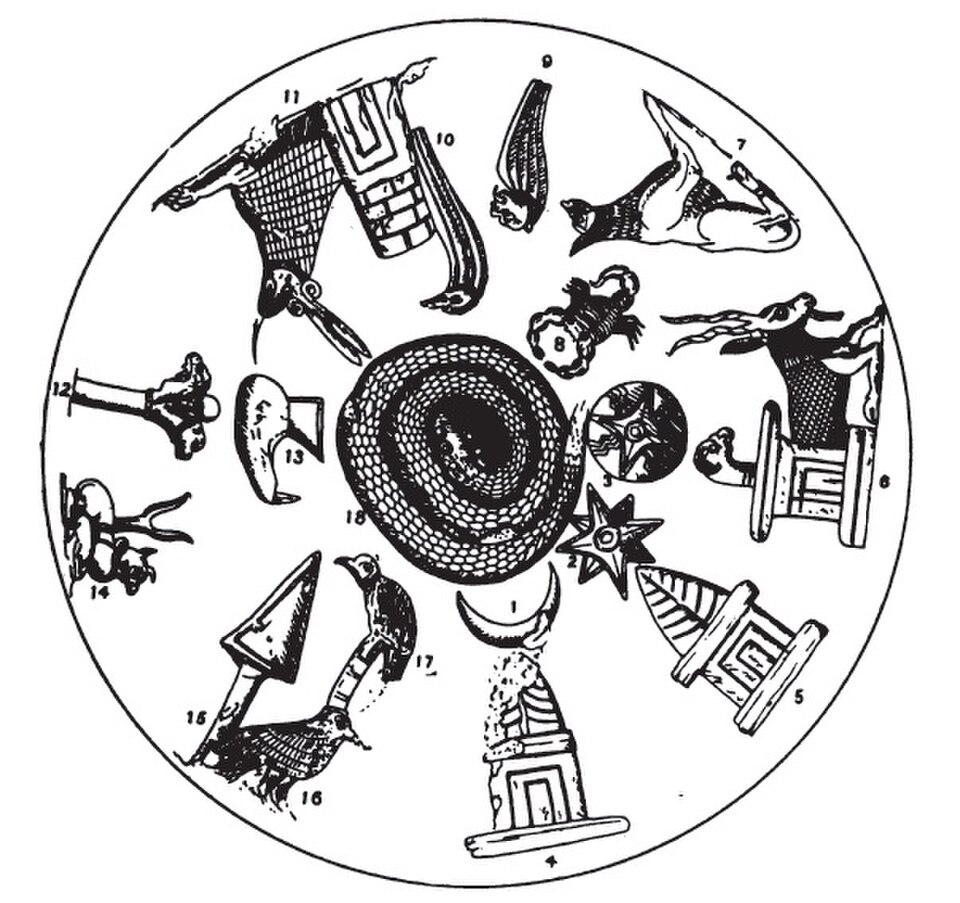
- The eight-pointed star was a characteristic symbol of Ishtar in Mesopotamian art.
- The lion was her emblematic animal, expressing martial strength and royal authority.
- Artworks could show the goddess accompanied by lions or standing upon a lion.
These symbols made her recognizable on objects such as cylinder seals, small engraved cylinders used to impress images into clay.
Babylon’s Ishtar Gate
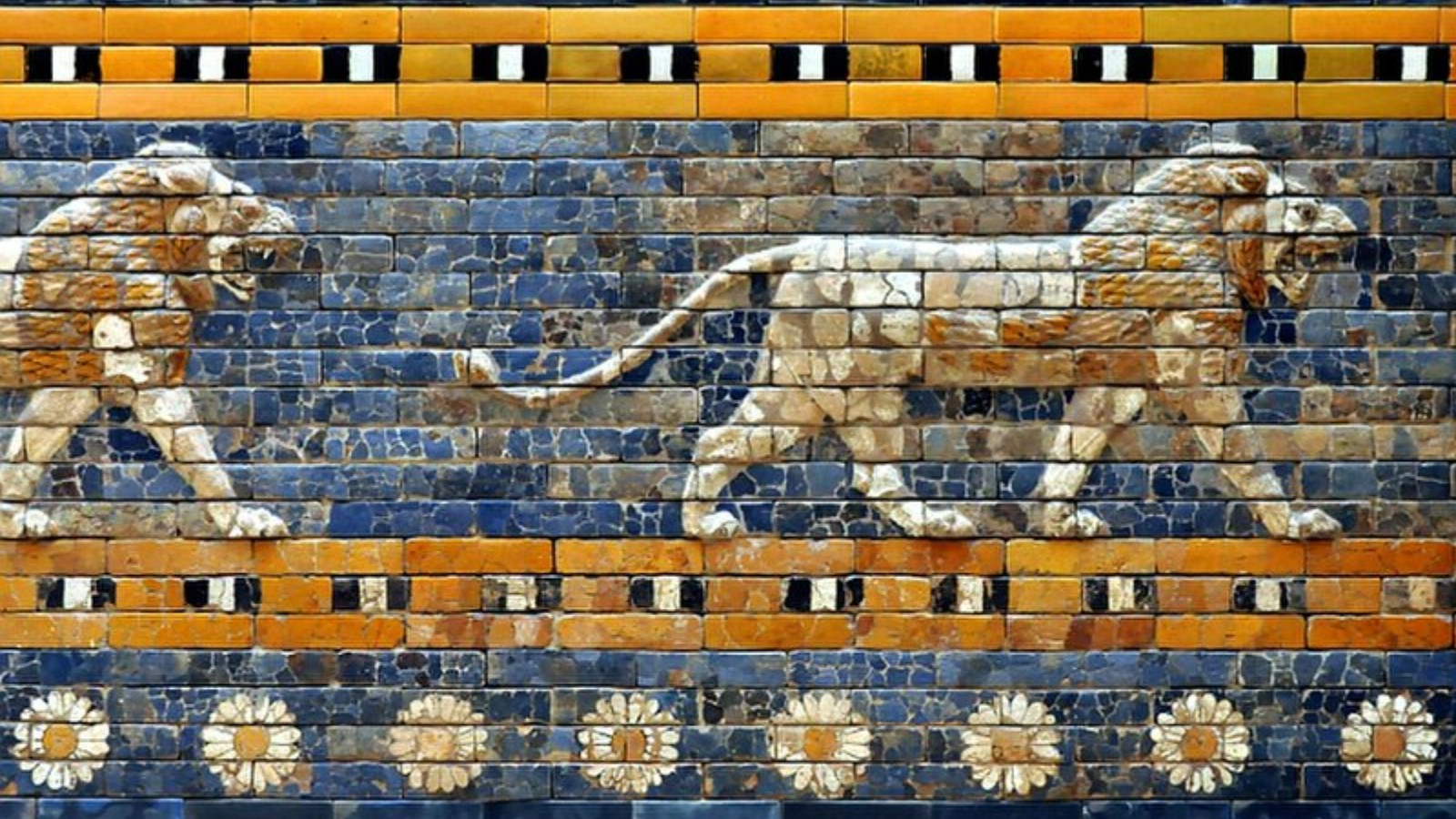
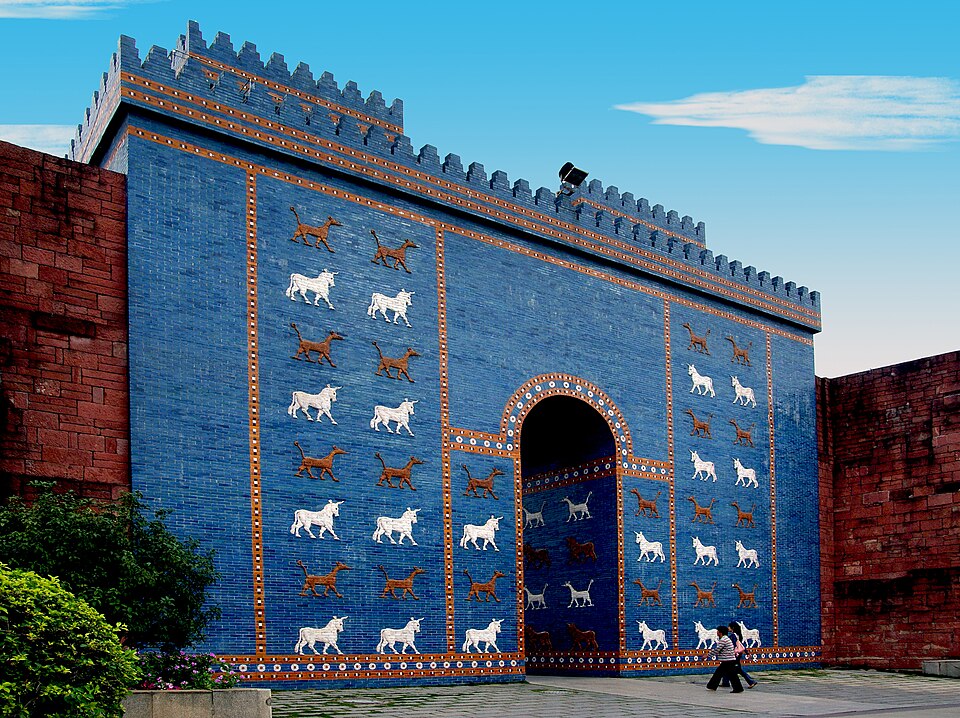
King Nebuchadnezzar II constructed the Ishtar Gate as a monumental northern entrance to Babylon. Named for the goddess, it combined religious significance with a striking display of royal power.
Its brilliant blue appearance came from glazed bricks, not a structure built from lapis lazuli. The gate featured reliefs of dragons and bulls, while lions decorated the associated Processional Way. Together, these monuments helped turn entry into the city into an imposing ceremonial experience.
Seven Gates to the Underworld
In the myth of Ishtar’s descent, the goddess enters the underworld ruled by her sister Ereshkigal. Reaching that realm requires her to pass through seven gates.
At each gate, a piece of clothing or an ornament is removed. By the time she reaches Ereshkigal, she is naked. The sequence strips a powerful goddess of the outward signs of her status and places her under the authority of another ruler.
Gilgamesh and the Bull of Heaven
In the Epic of Gilgamesh, Ishtar offers marriage to Gilgamesh, the king of Uruk. He refuses, citing the suffering experienced by her previous lovers, including both humans and animals.
Enraged by the rejection, Ishtar turns to the god Anu and demands the Bull of Heaven. The creature is sent against Uruk, bringing destruction. This episode presents the dangerous consequences of provoking a deity whose passions are inseparable from her destructive power.
Hymns and a Wider Legacy
Enheduanna, an Akkadian high priestess often described as the earliest author known by name, is traditionally credited with hymns praising Inanna. These compositions celebrate the extraordinary authority of the goddess identified with Ishtar.
Ishtar’s influence also belongs to a wider network of ancient Mediterranean religious traditions. Scholars have linked aspects of the Greek goddess Aphrodite to Near Eastern goddesses such as Ishtar and the Phoenician Astarte. This was a process of cultural exchange and adaptation, rather than a simple change of name.
Key facts
- Ishtar was a major Mesopotamian goddess of love, sexual desire, warfare, and political power.
- She was associated with the planet Venus and represented by an eight-pointed star.
- King Nebuchadnezzar II built Babylon’s monumental Ishtar Gate.
- In her underworld myth, Ishtar surrendered clothing or ornaments at seven gates.
- Gilgamesh’s rejection of Ishtar led her to demand the Bull of Heaven from Anu.
Test your knowledge
Ready to quiz yourself on History & Heritage? Take the quiz now!
Start Quiz →Published by WizdomMaster · Educational content for quiz enthusiasts